The Jewish photographer and the face of the Jewish Jesus
Dr Celeste Johnson
One prophecy. One burial cloth. One reluctant Jewish photographer. The convergence of these three stories forms one of the most unexpected narratives in the modern encounter between science, history and faith.
The prophet Isaiah wrote about the Jewish Suffering Servant in chapter 53:
Who has believed our message
and to whom has the arm of the Lord been revealed?
He grew up before him like a tender shoot,
and like a root out of dry ground.
He had no beauty or majesty to attract us to him,
nothing in his appearance that we should desire him.
He was despised and rejected by mankind,
a man of suffering, and familiar with pain.
Like one from whom people hide their faces
he was despised, and we held him in low esteem.
Surely he took up our pain
and bore our suffering,
yet we considered him punished by God,
stricken by him, and afflicted.
But he was pierced for our transgressions,
he was crushed for our iniquities;
the punishment that brought us peace was on him,
and by his wounds we are healed.
We all, like sheep, have gone astray,
each of us has turned to our own way;
and the Lord has laid on him
the iniquity of us all.
He was oppressed and afflicted,
yet he did not open his mouth;
he was led like a lamb to the slaughter,
and as a sheep before its shearers is silent,
so he did not open his mouth.
By oppression and judgment he was taken away.
Yet who of his generation protested?
For he was cut off from the land of the living;
for the transgression of my people he was punished.
He was assigned a grave with the wicked,
and with the rich in his death,
though he had done no violence,
nor was any deceit in his mouth.
According to the New Testament, this villainised, humiliated, pierced and redemptive Servant describes Jesus, crucified with the inscription: King of the Jews.
He was assigned a grave “with the rich in his death”. It was Joseph of Arimathea (mentioned in all four gospels, and described as having been “rich”, “prominent”, “good” and “religious”) who requested Jesus’ body from Pilate and who purchased “fine” linen - expensive, high quality, and accessible only to the elite - placing the wrapped body of Jesus in a newly cut tomb of rock .
Could it be that this linen has, centuries later, been photographed by a Jew?
Enter Barrie Schwortz, born a year after World War 2 ended. In Pittsburgh, Pennsylvania, Barrie was your average orthodox Jewish boy. He developed a passion for photography while growing up, and by the 1970s was operating a commercial photographic studio which started gaining a strong reputation for its scientific, medical and technical work – for example, extracting new information from highly classified motion pictures of the mushroom clouds of above-ground atomic explosions (Schwortz, B., Powell, G., 2021).
Imagine if Barrie might unlock key photographic clues about the Shroud of Turin, long been claimed to be the burial cloth of Jesus of Nazareth. Indeed, C.S. Lewis once received a photograph of the Shroud’s face from a lifelong friend. Though he was by no means devoted to relics, he placed the image on his bedroom wall as a constant reminder that “He was a man, and even a dead man.”
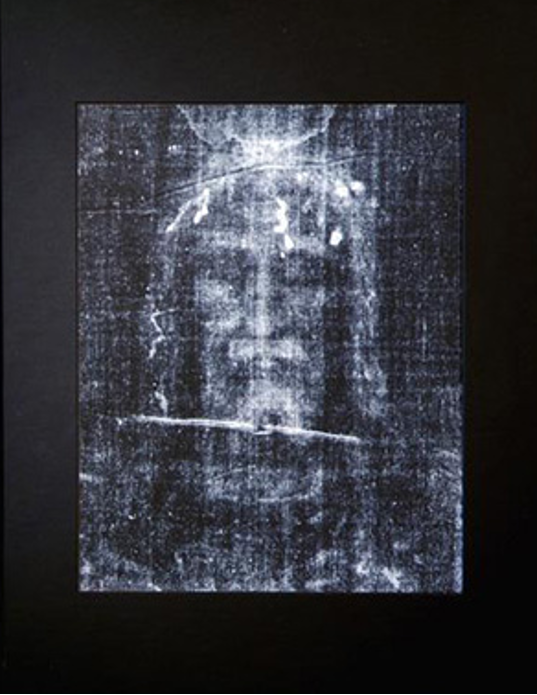
Figure 1: Picture of the face of the Shroud of Turin, which hung in the bedroom of CS Lewis' home in Oxford (Shroud.com).
Unlike medieval shrouds – where cost-cutting and efficiency would have wool, linen and silk garments all being integrated on the same looming machine – the Shroud of Turin satisfies the strict Jewish sha’atnez requirements (that linen and wool should never both be used in the same textile, especially for something as important as burial).
The body was placed on one half of the Shroud, with the other half pulled up, over the top of the head, and down the front of the body. Figure 2 shows the front facing half of the Shroud. The dark marks are burn marks from a fire in France in 1532, and their symmetry reflects the way the cloth had been folded, as seen in Figure 3.
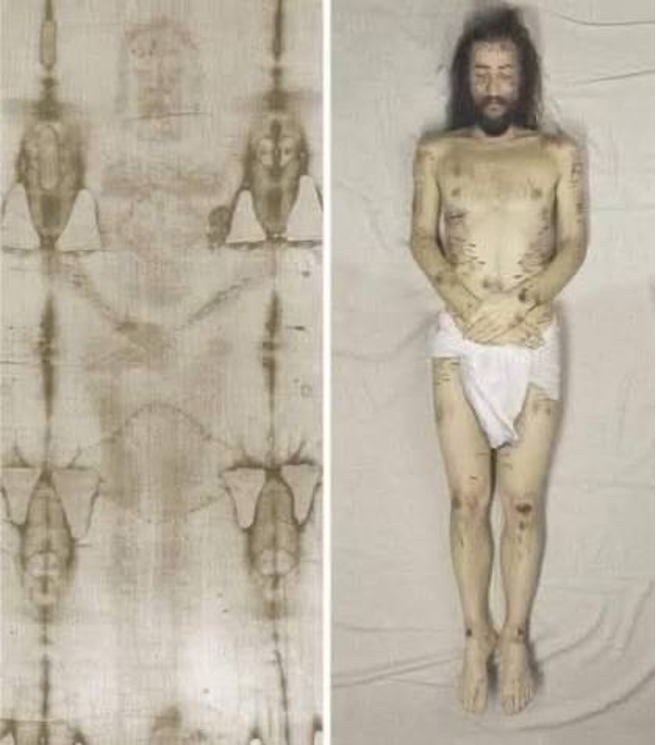
Figure 2: Schematic picture of the front-facing half of the Shroud, to show how it relates to a wrapped burial figure
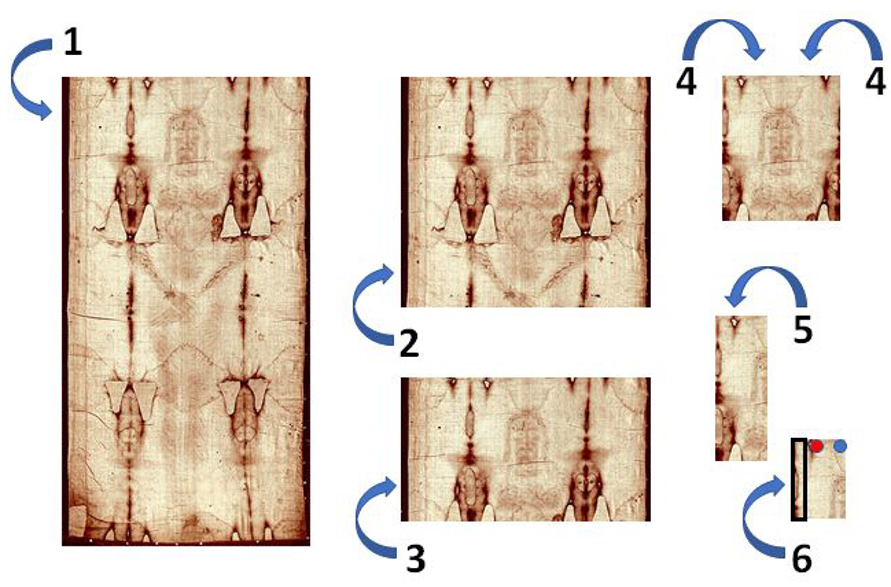
Figure 3: Schematic picture of the bottom half of the Shroud, showing how the burns marks came to appear symmetrically on it
The Shroud is intriguing because, apart from the ubiquitous bloodstains and wounds consistent with the Gospel accounts of Jesus' crucifixion (see Appendix C), it also bears the image of a human body (Figures 2 and 3). Remarkably, that image resides only on the outermost 0.2 μm of each linen fibre. The fact that the image stands out so much more vividly when seen in the negative (as seen, for example, in Figure 1) was first accidentally stumbled upon by amateur Italian photographer Secondo Pia in 1898. In the 1960’s, a further breakthrough was made when photographer and artist Leo Valla, projected an image onto a block of clay and sculpted a 3d face entitled, “Man on the Shroud,” based purely by mapping light intensity to spatial depth – and the result was remarkably life-like (Schwortz, B., Powell, G., 2021), as seen in Figure 4 below.
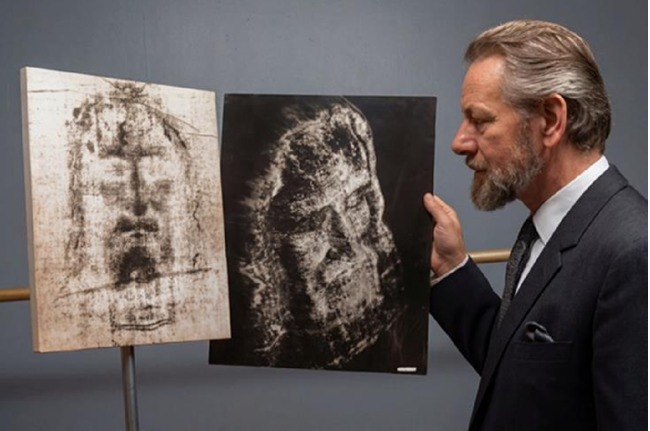
Figure 4: Leo Vala's 1967 sculptural reconstruction, created by projecting a Shroud negative onto clay and carving the resulting relief (Grasso,O., 2026)
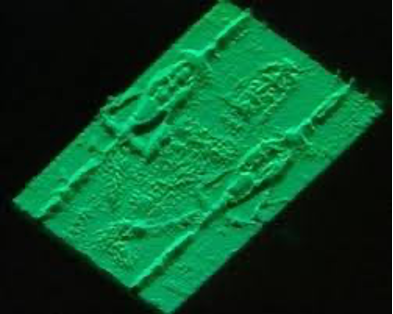
Figure 5: A photo of the Shroud analysed by a VP-8 analyser shows that 3D information is encoded in the Shroud (Schwortz, B., Accessed 5 May 2026).
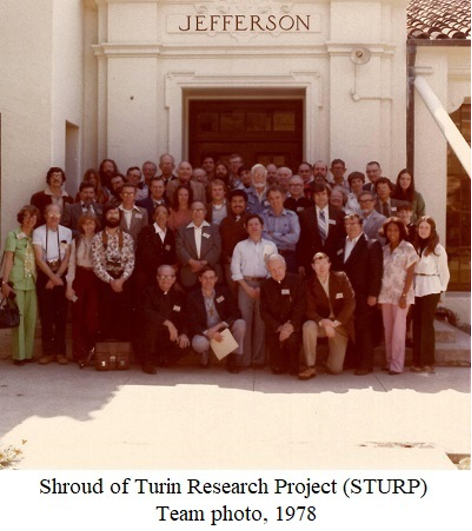
A multidisciplinary team known as the Shroud of Turin Research Project (STURP) was assembled in 1978 to conduct the most comprehensive scientific examination ever undertaken of the cloth. Physicists, chemists, imaging specialists, forensic scientists and photographers—including Barrie Schwortz—approached the investigation with considerable scepticism. Their expectation was straightforward: modern science would expose the Shroud as a medieval creation.
Barrie's own involvement almost never happened. When fellow photographer Don Divan first asked what he knew about the Shroud of Turin, Barrie laughed: "But I'm Jewish." Divan explained that unusual image data—including unexpected three-dimensional information revealed by VP-8 image analysis—had prompted leading researchers to investigate further, and that they needed an experienced scientific photographer.
Barrie initially declined. Only after repeated encouragement—and, as he later joked, the attraction of "a free trip to Italy"—did he agree. Even then he questioned whether he belonged among scientists from institutions such as NASA's Jet Propulsion Laboratory and Los Alamos. One colleague answered simply: "Go to Turin. Do the best job you can do. One day you'll know." Barrie would later say that those words kept him on the project for the next four decades.
After seventeen months of meticulous planning (outlined in Appendix B), the STURP team arrived in Turin convinced that careful experimentation would quickly reveal a medieval forgery. Instead, their confidence evaporated almost immediately. Barrie later recalled the researchers joking that fifteen minutes with the scientific method would settle the matter. After the examination began, "no one was laughing." Working almost continuously throughout the allotted 120 hours, they found themselves confronting observations they could not readily explain.
Those five days produced more questions than answers. Roger Morris of Los Alamos captured the team's mood with characteristic irony: if the Shroud were a forgery, then its creator would also have needed expertise in painting, pathology, textiles, Roman crucifixion—and even three-dimensional image encoding. The official STURP summary (Appendix B) ultimately concluded that no known physical or chemical process adequately explained the image.
In his 1983 book, ‘Report on the Shroud of Turin,‘ STURP team member Dr John Heller writes, “Though it was believed that there would be a confrontation between science and religion, none occurred. Rather, the relationship was harmonious and synergistic.” (Heller, J. H., 1983)
Indeed, this experience – the experience of a Jew seeing the face of the Jewish Jesus in a burial shroud - so impacted Barrie Schwortz - the Jew who had been so reluctant to join the 1978 STURP project in the first place – that he dedicated the rest of his life to creating awareness about the Shroud. In 1996 (after publicly accepting that the Shroud was authentic) he created the website “shroud.com” – recognised as the oldest, largest, and most extensive Shroud resource on the internet - created to “counter inaccurate media reports by providing primary, scientific, and accurate data.”, stating publicly that he thought the Shroud was authentic. He founded (and became founding president of) the non-profit corporation STERA (Shroud of Turin Education and Research Association, Inc.) in 2009, in order “to ensure the long-term preservation of his vast collection of photographic materials (thousands of images), documents, and the shroud.com website itself, which he donated to the association”. He also created the website shroud3d.com, focused on the creation of high-resolution, 3D holographic images of the Shroud. He also spent over 40 years lecturing, writing, and educating the public on the scientific findings of the Shroud, as well as going on extensive lecture tours on the topic. In his TedX talk on the subject, he notes how, with receiving a thousand emails a day, this had turned into a full-time job! He also noted with a laugh the irony that he, a Jewish man, was lecturing future priests about the Shroud of Turin – and that he, a Jewish man, was on a mission to try to convince Christians of the authenticity of the Shroud of Turin!
“I truly believe that only God would think to choose a Jewish man, who had no emotional attachment to Jesus, who was a total sceptic, and with a pretty negative attitude I might add, and put him on that team.”
Something beautiful that came out of Barrie’s work on the Shroud is that, after having made the choice at age 13 to become an atheist, the Shroud of Turin brought him back to his roots - and back to his faith in God. With a very warm and humble countenance he concludes the Ted Talk by saying,
“I’ve learned as a child that the Jews were the chosen people … I’ve never felt very chosen, but now, because of the Shroud, for the first time in my life, I get it! And yet, all God asked me to do was, ‘Tell the truth Barrie’… How many Jews can claim that it was the Shroud of Turin that brought them back to their faith in God – I can. All I can say is if I’m not an example of religious freedom and scientific research, I don’t know what is. ”
Every photographer knows that light reveals a face. Yet every so often a face reveals something about the light. Barrie Schwortz devoted much of his life to photographing what he once regarded simply as an archaeological curiosity. Decades later he found himself looking not merely at an ancient image, but perhaps at Him who claimed to be the Light of the World.
“Frankly, I am still Jewish, yet I believe the Shroud of Turin is the cloth that wrapped the man Jesus after he was crucified. That is not meant as a religious statement, but one based on my privileged position of direct involvement with many of the serious Shroud researchers in the world, and a thorough knowledge of the scientific data, unclouded by media exaggeration and hype” (Barrie Schwortz).
Whatever one concludes about the authenticity of the Shroud, it has surely accomplished something remarkable: it has reminded millions that the central figure of Christianity did not first appear as a Roman, a European, or a medieval icon, but as a Jewish man from first-century Galilee—in the words of Einstein (1929), "the luminous Figure of the Nazarene."
References
Einstein, A. (1929). The Saturday Evening Post, 26 October 1929.
Flury-Lemberg, M. (2008). Sacred relic still shrouded in mystery. Available from: https://www.swissinfo.ch/eng/culture/sacred-relic-still-shrouded-in-mystery/6545354#:~:text=She%20describes%20her%20work%20as,for%20Jesus%20Christ%2C%E2%80%9D%20she%20comments. URL
Flury-Lemberg, M. (2009). The image of a crucified man on the Turin Shroud. Conserving Textiles. p.43.
Grasso, O. (2006). The Shroud of Turin: A Forensic Summary of the Evidence (1st ed.)., ©Otangelo Grasso
Heller, J.H. (1983) Report on the Shroud of Turin. Paperback Edition, Houghton Mifflin Company, Boston.
Schwortz, B., Powell, G. (2021). Interview with Barrie Schwortz. Available from: https://guypowell.com/interview-with-barrie-schwortz/. URL
Schwortz, B. (Accessed 5 May 2026). Artificial Intelligence Analysis of Images of the Shroud of Turin - Scientific Figure on ResearchGate. Available from: https://www.researchgate.net/figure/P-8-image-of-Shroud-Barrie-M-Schwortz-collection-STERA-Inc-11-with-permission_fig3_393213034 . URL
Schwortz, B. 2013. The Shroud and the Jew: Barrie Schwortz at TEDx ViadellaConciliazione. Available at: https://www.youtube.com/watch?v=4G4sj8hUVaY. URL
STURP (1981). A Summary of STURP's Conclusions. Available from: https://www.shroud.com/78conclu.htm. URL
Schematic images of Shroud: https://acesse.one/hzsavti; https://sl1nk.com/wxg9vkc
Wilson, I., & Schwortz, B. (2000). The Turin Shroud: The illustrated evidence. Michael O'Mara Books.
Appendix A
Observations corroborating the biblical assertion that Joseph of Aramathea, a wealthy and prominent man (and secret believer) purchased a shroud of “fine linen” to wrap Jesus in is further found in the details relating to the way the Shroud was woven, as seen below (Grasso, 2026):
The use of Z-twist threads (spinning the flax thread the opposite way to which it naturally goes for a higher consistency and quality product) – attested to in Egyptian, Greek, Italian and Syrian production.
3/1 Herringbone weave, characteristic of elite textiles from Mediterranean centres, showing technical sophistication. This weave requires sophisticated four-harness loom, 30% more thread, and greater skill and time.
Flax isotopes themselves show that the flax used to make the linen was obtained from Eastern Mediterranean regions.
Average flax diameters 13 micrometres (compared with human hair being 70 micrometres).
Average cloth thickness being 315-390 micrometres (roughly the thickness of three pieces of paper).
Special and highly technical seam technique consistent with Masada artefacts (73AD).
While Medieval cloth was sun-bleached post-weaving to ensure a uniform bleach, the Shroud has subtle banding, showing that the thread was bleached before weaving.
Trace quantities of cotton in line with Middle Eastern processing environments.
Splice joins consistent with longer yarn preparation for smoother yarn continuity (and not with medieval length yarn preparation) – similar to the quality seen in the Dead Sea Scrolls wrappings, Egyptian fine linen and first century Mediterranean textiles.
Appendix B
Appendix B1: STURP Team Composition
The STURP (Shroud of Turin Research Project) team of 1978 included more than 30 highly qualified scientists and experts, including:
Barrie Schwortz: Official documenting photographer and consultant.
John P. Jackson: Physicist and co-founder of STURP.
Eric J. Jumper: Physicist and co-founder of STURP.
Vernon Miller: Chief scientific photographer (Brooks Institute).
Don Lynn: Imaging specialist from NASA's Jet Propulsion Laboratory.
John Lorre: Imaging specialist from the Jet Propulsion Laboratory.
Thomas D'Muhala: President of NUTEK Corporation.
Ray Rogers: Chemist from Los Alamos National Laboratory.
Alan Adler: Blood chemist.
Ernie Brooks: Scientific photographer from the Brooks Institute of Photography.
Mark Evans: Photomicrographer.
Roger Gilbert: Spectroscopy expert.
Charles Webb: Representative from Eastman Kodak.
Appendix B2: Preparation for the STURP Project
The STURP went through 17 very thorough months of preparation for the research trip to Turin where they would have 120 hours to research the Shroud. In an interview with Guy Powell, Barrie Schwortz recollects (Schwortz, B., Powell, G., 2021):
“What amazed me, and I can say this, speaking of my fellow team members, even though I’ve worked with scientists and researchers, over the years, I had never met a more dedicated group of empirical people than this group of scientists. They absolutely were dedicated to doing this. So, they sat in, and we spent 17 months in advance of going to Turin, just to plan out our experiments
that were all put into a test plan that was submitted to the then owner of the Shroud King Umberto… they had to anticipate every possible problem that might be encountered and be prepared to deal with those problems should they arise. And sure enough, a number of them almost on a daily basis did and the thoroughness of their preparation still amazes me at how they were able to anticipate what possibly could go wrong. And provide a way of dealing with that should it arrive. One of the best examples is the steel table that we used that was constructed specifically for this purpose to attach the Shroud to it, with magnets, so it wouldn’t damage the cloth with pinholes or clamps or something like that. And once the table arrived in Turin, they found that it had oxidized that the steel had a white powdery surface on it, that would come off. You could rub it off on your hands, and obviously couldn’t put the Shroud on that. They anticipated that and they brought with them (remember, we had two guys from NASA), they brought several rolls of gold foil mylar – the same stuff that you see inside the cargo bay of the space shuttle, or on satellites, very expensive stuff. And we had to cover the panels of our table with that gold foil mylar. But the fact that they anticipated that could be a problem and brought a solution with us - sure enough that we needed to use – I mean, that just is a small example of how thorough their planning was to go in. This wasn’t just a bunch of guys going, okay, let’s hop on an airplane and go look at the Shroud.” (Schwortz, B., Powell, G. , 2021)
Appendix B3: STURP Summary
The following was given as the summary of STURP’s conclusions (STURP, 1981):
After years of exhaustive study and evaluation of the data and the submission of their research to highly regarded peer-reviewed scientific journals, the following official Summary of STURP's Conclusions was written by John Heller (in non-technical language) and distributed at the press conference held after STURP's final meeting in October 1981:
No pigments, paints, dyes or stains have been found on the fibrils. X-ray, fluorescence and microchemistry on the fibrils preclude the possibility of paint being used as a method for creating the image. Ultra Violet and infrared evaluation confirm these studies. Computer image enhancement and analysis by a device known as a VP-8 image analyzer show that the image has unique, three-dimensional information encoded in it. Microchemical evaluation has indicated no evidence of any spices, oils, or any biochemicals known to be produced by the body in life or in death. It is clear that there has been a direct contact of the Shroud with a body, which explains certain features such as scourge marks, as well as the blood. However, while this type of contact might explain some of the features of the torso, it is totally incapable of explaining the image of the face with the high resolution that has been amply demonstrated by photography.
The basic problem from a scientific point of view is that some explanations which might be tenable from a chemical point of view, are precluded by physics. Contrariwise, certain physical explanations which may be attractive are completely precluded by the chemistry. For an adequate explanation for the image of the Shroud, one must have an explanation which is scientifically sound, from a physical, chemical, biological and medical viewpoint. At the present, this type of solution does not appear to be obtainable by the best efforts of the members of the Shroud Team. Furthermore, experiments in physics and chemistry with old linen have failed to reproduce adequately the phenomenon presented by the Shroud of Turin. The scientific consensus is that the image was produced by something which resulted in oxidation, dehydration and conjugation of the polysaccharide structure of the microfibrils of the linen itself. Such changes can be duplicated in the laboratory by certain chemical and physical processes. A similar type of change in linen can be obtained by sulfuric acid or heat. However, there are no chemical or physical methods known which can account for the totality of the image, nor can any combination of physical, chemical, biological or medical circumstances explain the image adequately.
Thus, the answer to the question of how the image was produced or what produced the image remains, now, as it has in the past, a mystery.
We can conclude for now that the Shroud image is that of a real human form of a scourged, crucified man. It is not the product of an artist. The blood stains are composed of hemoglobin and also give a positive test for serum albumin. The image is an ongoing mystery and until further chemical studies are made, perhaps by this group of scientists, or perhaps by some scientists in the future, the problem remains unsolved.
Appendix C
the image on the Shroud is consistent with a crucified man with very similar facial features to the way we tend to picture him today. Here are some of the wound marks noted on his body:
Dumbbell-shaped wounds consistent with flagellation (the whip – a wooden dowel with three rawhide lines coming off it and lead balls at the end). Lashes are all over the front and back of the body, indicating being flogged from two directions (indicating two torturers) - over 200 on the back and 172 on the front including the crotch; probably 700 wounds on his body if you count the lateral ones. Note that under the Jewish judicial systems, lashes were limited to 40, however, under the Roman judicial system, there was no upper limit – so this observation is in-line with biblical references of Jesus receiving the lashes from the Roman, Pilate. The early church historian Eusebius of Caesarea described how Christian martyrs who were scourged had their veins laid bare, and that the muscles, sinews, and bowels of the victim were exposed to view (Ecclesiastical History, Book 4, Chapter 15). Philo of Alexandria, a Jewish philosopher who lived during Jesus's lifetime, described Jewish victims of scourging at the hands of Romans who were stripped and "lacerated with scourges," some of whom "had to be carried out on stretchers and died at once, while others lay sick for a long time despairing of recovery." T Most people would not be alive after this level of scourging. It is estimated that the person of the Shroud would have lost 0.5 – 1 litres of blood during the scourging alone, putting his heart under immense stress, and potentially explaining the relatively quicker death on the cross as noted in the Bible.
A spear wound between rib five and six, where a liquid consistent with the “blood and water that flowed from Jesus’ side” can be seen.
The left cheek is raised and severely punctured in agreement with the beating he received at Caiaphas’ house (“prophecy, who beat you!”).
Crucifixion wounds on hands (through wrists and not the anatomically unfeasible hands as seen in most Medieval depictions – the same Greek word is used for ‘hands’ and ‘wrists’) and feet (through heels – a single nail through both feet at the same time).
Four fingers shown, and not the usual medieval five, in line with the thumb protruding inwards due to tissue damage.
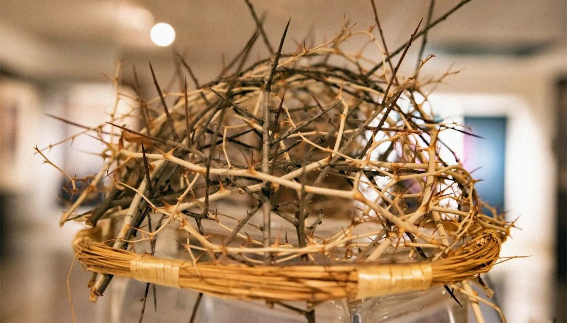
Fifty puncture marks on the head consistent with thorns – Bethlehem thorns to be precise; this causes a pooling of blood at the back of the head. So this does not seem to be some kind of Medieval halo.
Samples of limestone and clay from Jerusalem have been found on the nose, feet and knees of the image, which is consistent with the falls Jesus is described as having on the via dolorosa while carrying the cross.
Bruno Barbaris, Associate Professor of Mathematical Physics in the Department of Mathematics at Turin University, has stated that there is a one in 200 billion chance that it is anyone other than Jesus of Nazareth based on the various physical representatives in the image which track the account so accurately.